



A serious flaw in the React Server Components world has created an easy opening for attackers. People are calling it React2Shell. It’s being called React2Shell.
React is a framework that sits under many modern websites and handles both the visual layer and, in some setups, parts of the server side process. The flaw sits inside the part of React that handles server instructions. An attacker can send one crafted request to a site that uses these components and the server may run code the attacker controls. No login. No social trick. Just a direct hit.
Why this matters for everyday websites
React sits under platforms people use every day like Facebook, Instagram, Netflix and Airbnb. Because most people only see React as a design tool and not a cybersecurity concern, many businesses don’t realise a normal page request can reach the server logic that runs their application.
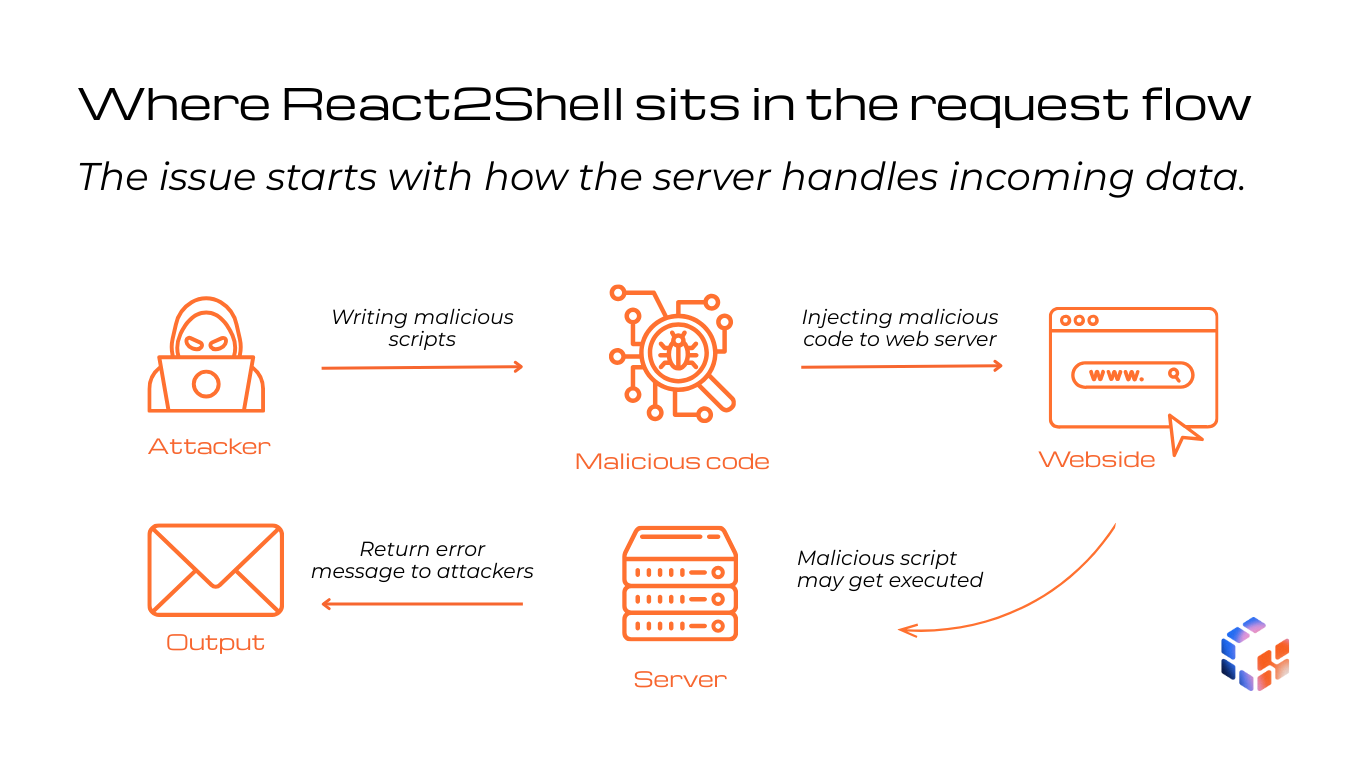
React2Shell works because the server accepts a structured request that looks safe but carries instructions the attacker controls.
What attackers have done so far
When the flaw became public, scanners went out immediately. Some were basic bots. Some were organised groups checking who had missed the fix. They were looking for systems that would let the request through.
A few systems did. That is where EtherRAT showed up. It is small and quiet. It gives the attacker a first step inside the server. From that step, they can run commands, move around, or drop something heavier. It is the beginning of a full compromise if no one catches it early.
What stands out for people who already work in defence
Most framework bugs need a chain before the attacker gets anywhere meaningful. This one does not. It lands straight in the part of the traffic that every web app already expects. That means the attacker’s first step is already deeper than usual.
The updated versions fix this vulnerability. Checking the version and updating it removes the entry point attackers use to get that first foothold.
A quick look at your logs helps catch anything already underway. Strange structured requests on simple routes can point to someone testing the flaw. New files or odd outbound traffic can mean they already turned that test into real access.
If a company wants to know whether this flaw shows up in their environment, Gridware’s Incident Response Team can confirm it and check whether it has already been used.