AI Security & Governance Assessment
Virtual CISO (vCISO) services provide an organization with on-demand, external leadership and expertise from a seasoned Chief Information Security Officer to manage and mature its cybersecurity strategy and posture. Instead of hiring a full-time executive, a vCISO offers remote or in-person strategic guidance, risk assessments, policy development, and compliance support, creating a robust security program without the cost and commitment of an in-house executive. This flexible, cost-effective solution is ideal for organizations of all sizes that lack the internal resources or expertise to maintain a comprehensive cybersecurity program.
Understand how AI is being used across your organisation, where the material risks sit and what to do next.
AI adoption can move faster than the controls intended to govern it. Gridware gives leadership a clear, evidence-based view of current AI use, the associated security, privacy and governance risks, and a practical plan to address the gaps without slowing useful innovation.
Adopt AI with confidence before gaps become incidents
AI tools are often introduced quickly and independently across departments. Staff try public tools, teams buy AI-enabled software, and developers add models to existing products and workflows. This often leaves the organisation without a reliable view of what is being used, who has access, where data is going, or who is accountable.
Without that visibility, risk builds quickly. Sensitive information can reach unapproved providers, access controls become inconsistent, and AI-generated outputs might influence important decisions without adequate review. When boards, customers, auditors, or regulators ask for assurance, the organisation may not have the evidence to provide it.
Gridware’s AI Security & Governance Assessment examines how AI is actually being used, not only what written policy says should happen. We help leadership establish visibility, prioritise material risks, and put proportionate controls around continued AI adoption.
How can Gridware assist?
When to consider an AI Security & Governance Assessment
An assessment is useful when AI adoption has moved ahead of the organisation’s visibility, controls or governance.
Common triggers include:
AI tools have been adopted rapidly across several departments or business functions.
Leadership does not have a reliable inventory of AI tools, providers, accounts, integrations or use cases.
Sensitive, personal, confidential or client information may be entered into AI systems.
Your organisation is building or integrating AI without a consistent secure development and governance process.
A board, customer, insurer, auditor or regulator is asking how AI risk is managed.
You are preparing for ISO/IEC 42001 alignment or want a practical foundation for an AI management system.
What the assessment covers
We work through how AI is used across the business and test the controls around it, focusing on the areas of greatest exposure.
1. AI use discovery and inventory
We identify how AI is used across the organisation, including approved and unmanaged tools, business use cases, providers, user and service accounts, integrations, data flows, and systems developed or configured internally.
2. Governance, accountability and policy
We review decision rights, ownership, acceptable-use rules, approval processes, risk appetite, staff responsibilities, training and the oversight available to management and the board.
3. Security, privacy and information handling
We assess how sensitive, personal, confidential and client information is handled, including access controls, identity, retention, logging, monitoring, incident response and the safeguards applied to AI inputs, outputs and connected data sources.
4. Providers, procurement and data residency
We review third-party AI providers, contractual and data-use terms, hosting and jurisdiction, supplier assurance, procurement controls, and whether the chosen service is appropriate for the information and business process involved.
5. AI development, DevSecOps and coding practices
Where AI is developed or integrated, we review the controls applied to design, coding, testing, release and monitoring. This includes AI-generated code, secrets, dependencies, data, model and prompt changes, human review and production oversight.
6. Business, compliance and operational risk
We consider how AI affects important decisions, customer outcomes, legal and regulatory obligations, business continuity, record keeping, human oversight and the organisation’s broader risk and control environment.
Built on real-world security experience
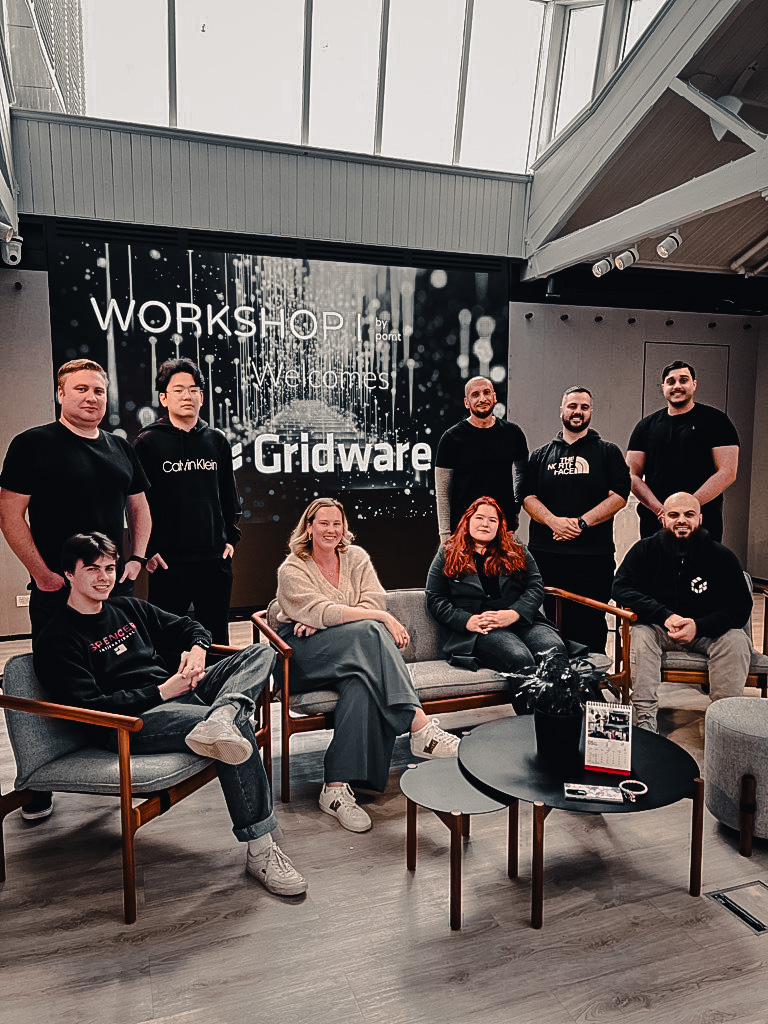
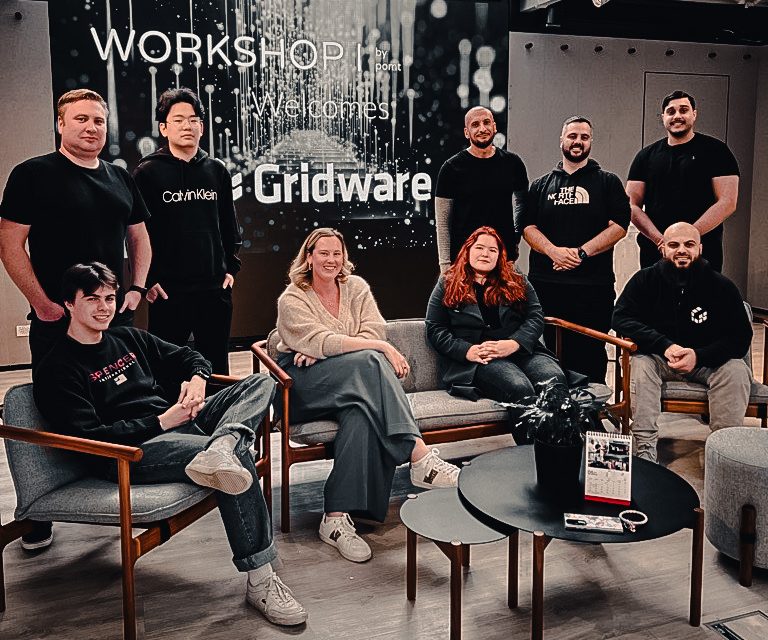
Gridware brings together a focused team of cyber security specialists with experience spanning strategy, intelligence, governance and technical security. We apply our experience across strategy, intelligence, governance and technical security to help organisations understand their AI use, assess their exposure and establish practical controls. Our team has developed AI security and governance strategies, delivered enterprise security programs and investigated cyber incidents across a range of industries and geographies.

Our Assessment Approach
1. Scope and plan
Confirm the business objectives, departments, priority use cases, systems and evidence to be reviewed.
2. Discover actual AI use
Run workshops with relevant teams such as leadership, governance, risk, IT, security, finance, development, sales, marketing and operations.
3. Review evidence and controls
Examine policies, registers, provider arrangements, contracts, workflows, representative configurations, access controls, integrations, data flows and development practices.
4. Assess and prioritise
Evaluate risks and control gaps against the organisation’s context and recognised AI governance, risk, security and privacy practices.

5. Report and brief

Present clear findings, prioritised actions and a practical improvement roadmap to management and other agreed stakeholders.
AI Security & Governance
What you receive from the assessment
Your completed assessment includes:
An organisation-wide register of AI tools, providers, systems and use cases.
A prioritised remediation roadmap with practical actions and recommended ownership.
A risk and control-gap assessment covering governance, security, privacy, suppliers, operations and development practices.
An executive-ready report and briefing to support leadership, board, customer and assurance conversations.
A clear view of where further technical review, policy development, implementation support or ISO/IEC 42001 readiness work may be needed.
Risk-ranked findings that distinguish urgent exposures from longer-term maturity improvements.
Practical benefits for your organisation
Gain reliable visibility over AI use across the organisation.
Reduce the chance of sensitive information being exposed through unmanaged tools or providers.
Give leadership a defensible basis for approving, restricting or improving AI use cases.
Prioritise investment around the risks that matter instead of applying unnecessary controls everywhere.
Respond more confidently to board, customer, insurer, auditor and regulatory questions.
Enable useful AI adoption with clearer accountability, safeguards and decision-making.
Recognised frameworks, applied to your organisation
Our approach is informed by ISO/IEC 42001, the NIST AI Risk Management Framework, the Australian Government Guidance for AI Adoption, and established cybersecurity, privacy and risk-management practices. We use these sources to guide a proportionate assessment. The objective is not to apply every control mechanically, but to identify what matters for your organisation’s AI use, risk profile and obligations.
ISO/IEC 42001 readiness and certification support
The AI Security & Governance Assessment is not a certification audit. Where ISO/IEC 42001 is an objective, Gridware’s certified lead auditors can help your organisation establish or improve its AI management system, assess readiness, perform internal or pre-certification reviews, and prepare for an independent certification audit. Accredited certification is completed through an external certification body.
Typical timeframe
Most assessments are completed within 4 to 6 weeks. The final timeframe depends on organisational complexity, the number of departments and AI use cases, the availability of evidence and the agreed scope.
- GRC consultants who connect governance and compliance requirements to practical cybersecurity controls.
- An organisation-wide approach that examines actual business use, not policy in isolation.
- Clear executive communication combined with enough technical depth to identify where further investigation is required.
- Access to broader Gridware advisory, security assessment and remediation capabilities when the next step extends beyond the initial review.
Frequently Asked Questions About AI Security & Governance
What is an AI Security & Governance Assessment?
It is an organisation-wide review of how AI is selected, developed, introduced and used. It identifies material governance, security, privacy, supplier, compliance and operational risks, then provides a prioritised plan to improve control and oversight.
Does the assessment only review policies?
No. Policies are one source of evidence, but the assessment also uses workshops and representative evidence to understand actual AI use, providers, accounts, integrations, data flows, controls and development practices.
Does it cover both third-party AI tools and systems we build?
Yes. The assessment can cover employee and business use of services such as generative AI assistants and AI-enabled software, as well as AI systems the organisation develops, configures or integrates. The precise scope is agreed before the engagement begins.
Who should participate?
Participation depends on where AI is used. It commonly includes leadership, governance, risk and compliance, IT, security, privacy, finance, development, sales, marketing, customer service and operations.
Is this the same as AI penetration testing?
No. This is a governance and risk assessment focused on how the organisation adopts, develops and uses AI. Penetration testing and deeper technical testing are separately scoped where the assessment identifies a need.
Can Gridware help us prepare for ISO/IEC 42001 certification?
Yes. Gridware’s certified lead auditors can support gap assessment, AI management system development, internal audit and certification readiness. Formal certification is performed by an independent certification body.
Can Gridware help address the findings?
Yes. Depending on the findings, Gridware can support governance and policy development, risk treatment, control improvement, ISO/IEC 42001 readiness and separately scoped technical security work.
How long does the assessment take?
Most assessments take 4 to 6 weeks. We confirm the scope, participants, evidence requirements and delivery schedule before work begins.
Your Cybersecurity Experts

Ahmed Khanji
Chief Executive Officer

Hassan Zaatar
Chief Customer Officer

Lachlan Wright
Head of DFIR

Jawad Khan
Chief Information Security Officer
Gridware’s certification portfolio includes credentials held by both our in-house professionals and our trusted partner consultants.
Your digest of cybersecurity expertise and analysis from our cybersecurity experts, served up quicker than typing ‘password’ – get up to speed in no time.
Related Insights
Gridware has acted for hundreds of companies and helped them recover from potentially disastrous situations. Read about how our services have helped others.
Similar services
We partner deeply with clients to understand their needs, working closely and iteratively to provide robust, best-in-class security solutions
Talk to Gridware about an AI Security & Governance Assessment tailored to your organisation, AI use cases and risk environment.