



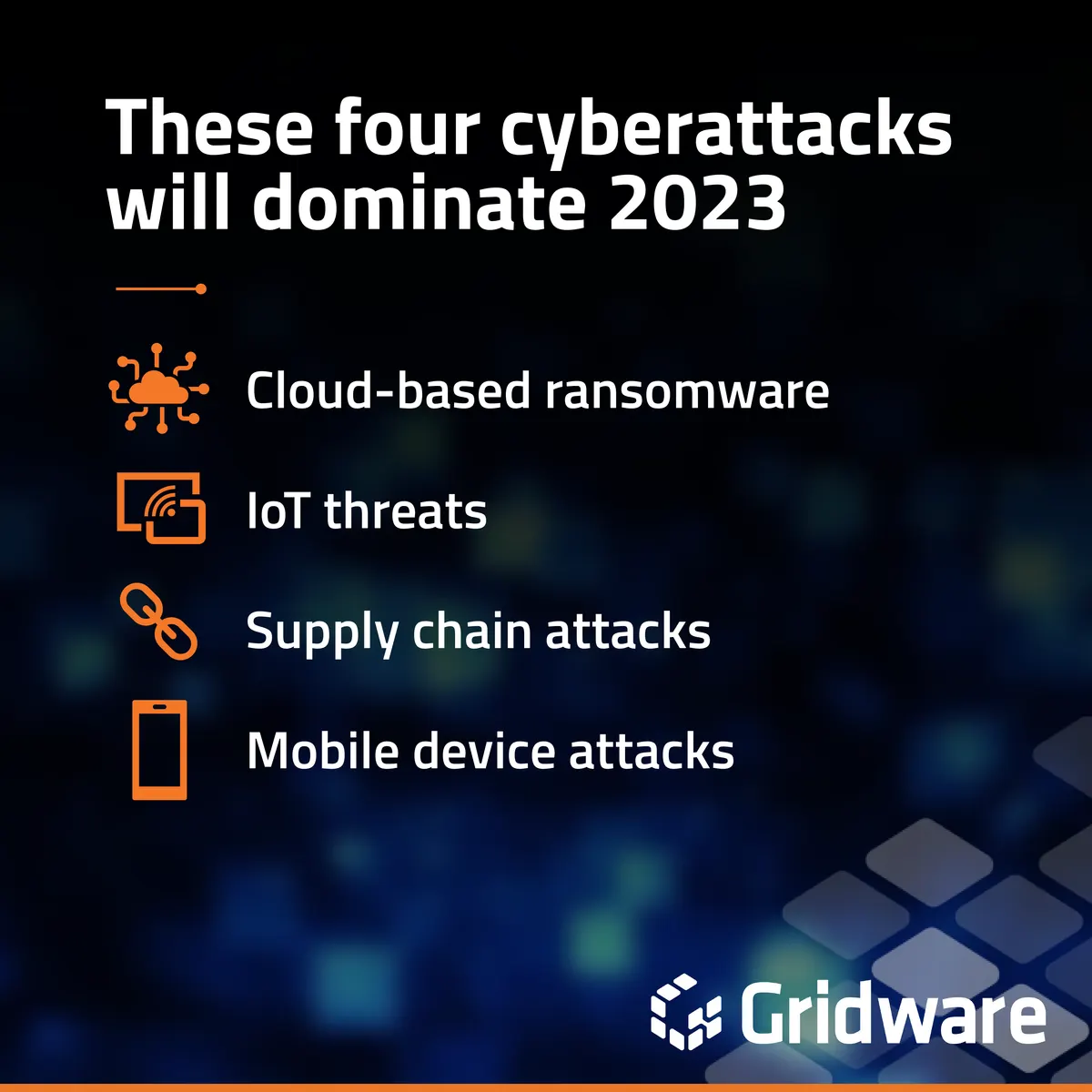
With most of the methods to prevent cyberattacks already known and implemented, in 2023 we expect a more aggressive attack. Attackers will exploit weaknesses that haven’t been used before, targeting individuals and businesses alike.
Attacks to look out for in 2023
1. Cloud-based ransomware attacks
Cloud-based ransomware attacks will be particularly concerning for businesses in 2023.The threat of ransomware has reached cloud environments and can spread across several different cloud providers, even to those that have invested heavily in security measures.
An attacker sends a phishing email holding an attachment, which, when downloaded, installs ransomware on the victim’s system. As the user interacts with the cloud to synchronise data and/or modify files (typically using an enterprise-grade product), the ransomware ‘piggybacks’ on the service and allows the threat actor to gain access to the cloud.
AWS has robust controls in place to protect against ransomware, but we’ve seen that many clients aren’t aware of this or have not properly reviewed their cloud configuration according to guidelines and standards. Investing in a comprehensive review of cloud security with leading consultants is crucial for ensuring compliance with these standards and protecting your organisation.
2. IoT Threats
Ransomware and other cyberattacks tied to the Internet of Things (IoT) are becoming a profitable target for hackers.
The newest variations of IoT attacks in healthcare, finance, utilities, and manufacturing exploit vulnerabilities in devices, such as wearables, in ways that can give attackers access to patients’ data, like medical histories and personal health records. Organisations need 24/7 monitoring to protect against these threats.
3. Supply chain attacks
In the days of large-scale data breaches and corporate espionage, it’s more important than ever to be aware of supply chain attacks.
These target a company’s third-party partners to gain access to its corporate network. It was found that at least 62% of organisations worldwide faced supply chain attacks in 2023, according to the X-Force Threat Intelligence Index 2022.
As companies become more aware and vigilant after high-profile attacks, cybercriminals are using more advanced tools and techniques to evade security measures and best practices. Enterprises need more proactive approaches that can help them see and consistently analyse user behaviour to detect suspicious patterns or accesses.
4. Mobile device attacks
With more businesses turning to mobile devices, it’s easy to see why they are a target for cyberattacks. Malicious apps, websites and jailbreaking techniques are the major threats to mobile devices.
Enterprise mobile app security solutions and effective employee training programs will teach employees device security and aid in staying ahead of attackers.
Staying secure in 2023
Staying safe from the mentioned cyberattacks in 2023 is not an easy task, as many of them are very sophisticated and hard to detect.
It’s no secret that cybersecurity is a challenge, and the path to becoming more secure can at times feel like an endless journey. The threat landscape is a constant moving target and security teams need to constantly adapt to stay ahead.
From keeping their software up to date, to checking for suspicious activity and watching their networks for unusual behaviour, individuals and organisations need to take proactive steps to stay safe from the latest threats.